Water softeners in Waukesha, WI
Waukesha water softeners, after the switch to Lake Michigan water
Since October 2023, Waukesha city taps have drawn on Lake Michigan, at about 8 grains per gallon, where the old deep wells gave roughly 21. For a lot of city homes, that makes keeping the softener already in the basement the honest answer, and on the Waukesha sewer, keeping it means having it optimized under the City's program, not resetting it yourself. Private wells in the Village of Waukesha and the Town of Genesee never switched at all.
Call (262) 333-5451Mon to Fri, 7am to 5pm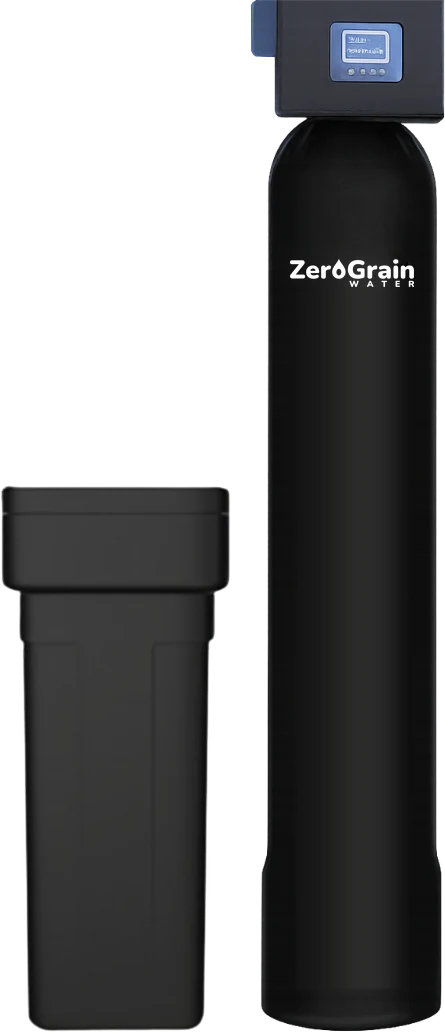
What is included
- A whole-home softener plus its brine tank, sized for the water you actually get: city lake water or your own well
- A drinking-water faucet at the kitchen sink, fed by reverse osmosis, which comes only as part of a whole-home softener
- The plumbing done by a licensed Wisconsin plumbing contractor, as state law requires
- Hardness measured at the house first, then checked at a faucet after the work until it comes back zero
- One price, given while you are on the phone, with no sales visit to follow
- Phone quotes Monday through Friday, 7am to 5pm
Waukesha water hardness
Source: City of Waukesha / Great Water Alliance, switch completed October 2023
Get your price
Send your details and we will call you with one price. Nobody comes to the house to sell you anything.
October 2023: the month Waukesha's water changed
The Waukesha Water Utility now buys its water from Lake Michigan and pipes it to city homes, a changeover it finished in October 2023. No community lying wholly outside the Great Lakes basin had been approved for Lake Michigan water before Waukesha. Approval came in 2016, granted under the 2008 Great Lakes Compact.
Before the changeover, Waukesha pumped deep well water at roughly 21 grains per gallon. The lake supply comes in near 8, roughly 60% softer. That is a big drop, yet 8 grains still rates as hard, not soft, on the US Geological Survey's scale.
On city water, the softener you already own may be enough
Many Waukesha softeners were set up for the old 21 grain water, and plenty may still be set that way. If yours still runs and your household is happy with the water, keeping it and having it adjusted for today's supply can make more sense than buying new. If that fits your house, that is what the call will tell you.
Other households do want a new system. The old unit has stopped keeping up, which a hardness test at a faucet it feeds will show, or the house has no softener and the family wants one. For them, replacing or adding a softener is a fair question, and the City's rule below is part of the answer.
The City's softener salt program follows the Waukesha sewer
Under the City of Waukesha's softener salt program, a softener is covered if its discharge flows to the Waukesha sewer system, a system that also serves parts of Pewaukee beyond the city line. Every softener running on it must be optimized by a company from the City's approved list, and a brand new softener is no exception.
According to the City, the optimizing company can bill for its visit. Whatever it bills is separate from us and sits outside our price. If your sewer is the Waukesha system, bring that up early on the phone, well before any paperwork, so the whole cost is clear from the start.
The Village of Waukesha and the Town of Genesee kept their wells
Lake water reached only the homes on the city's system. Next door, the Village of Waukesha counted 8,501 residents and the Town of Genesee 7,207 in Wisconsin's 2026 population estimates, and the private wells there still pump the same groundwater they always have.
No utility publishes a hardness figure for a private well, and neither the city's old number nor its new one describes yours. For a well household the softener question is the same as it was before 2023, which is why these homes are the plainest fit for what this site offers.
Where a new softener makes the most sense here
Two groups stand out. One is private-well homes outside the city system, whose water is whatever the ground supplies. The other is city homes replacing an old unit. Either kind of house may drain to the Waukesha sewer, where the City requires an optimizer certified for the softener's brand; if yours does, say so as the call begins, and before any price is given you will hear plainly whether the brand we supply has a certified optimizer on the City's list.
A house that fits neither may get a reason on the call to keep what it has rather than a sale, and that outcome is fine with us.
What the call needs from a Waukesha household
Phone between 7am and 5pm, Monday to Friday. Have your street address handy, or simply say a well supplies the house. Then tell us how big the household is, where the supply pipe enters, where any old softener sits, and any lab results for the well.
For a city address, mention whether your drains run to the Waukesha sewer, if you know. Those answers are enough to settle one price during the call, and no one comes out beforehand to look around or to make a pitch.
Install day: old unit out, zero at the faucet
The plumbing is handled by a contractor licensed for it in Wisconsin; under Wis. Stat. ch. 145, connecting a softener's drain is plumbing. Any old softener, quite possibly one set for the city's old 21 grain water, is disconnected and moved out, the new softener and brine tank are set beside the main line, and the bypass and drain line go in, the drain line ending above the drain at an air gap.
That same visit puts in the drinking faucet, fed by reverse osmosis, at the kitchen sink. Hardness is read before the work begins, and afterward a faucet is read as many times as it takes to show zero.
A Waukesha kitchen gets its drinking faucet only with a new system
Each whole-home system quoted here puts a reverse-osmosis drinking faucet at the kitchen sink, in a city house on lake water and in a well house in Genesee or the Village alike. The licensed plumbing contractor fits it on install day, on the same trip that sets the softener and brine tank at the main line.
Because it is part of the softener package, the faucet follows the same decision. If the honest answer for your house is to keep the softener you have, as it often is on city water now, there is no faucet to buy by itself; if a new system is the answer, the faucet is already in its one price.
Which number a Waukesha house is matched to: 8, 21 or its own well
The price is the same for every Waukesha house, so what the call works out is the fit. Four things decide it: which hardness figure suits the address, how big the household is, where the water comes in, and what stands there now. They size the softener and plan install day; not one of them changes what you pay. For a city house the figure is today's: about 8 grains, the lake supply every city tap now shares. One purchased supply serving the whole system makes a single city figure a fair place to begin. The old 21 grains is not, however many softeners in the city may still be set for it.
For a well house in the Village of Waukesha or the Town of Genesee, neither city figure applies. The match starts from the well's lab report, with its iron figure if it lists one, and where there is no report, from the hardness reading the plumber takes at the house before the work begins.
How many people live in the house sets the size of the system alongside the hardness. The spot where the supply pipe enters is where the new softener and brine tank will stand, and whatever stands there now, possibly a unit bought when the city still pumped well water, comes out first.
A faucet reading of zero closes the work. On the Waukesha sewer the City also requires optimization by a technician certified for the softener's brand, so that question is settled on the call before any price, and any optimizer's charge would sit outside ours.
Common questions
Is Waukesha city water still hard?
Yes, though much less than before. Multiply about 8 grains by 17.1 and the answer falls inside the USGS hard band of 121 to 180 milligrams per liter. The old well water, at roughly 21 grains, ran far above 180, in the very hard class.
My softener was set before October 2023. Is that a problem?
It may still be dialed for water near 21 grains while city taps now run about 8. On the Waukesha sewer system, the City's program wants softeners in use optimized by one of its approved companies, so that is the visit to ask the City about. It is not a visit we make.
Does the City's optimizer rule apply to a brand new softener?
Yes. On the Waukesha sewer system a new softener counts as one in use, so it needs optimizing too, by a technician the City lists as certified for that brand. Whether the brand we supply has one is something the call answers plainly before you hear a price.
Our Genesee house runs on a well. Did the lake water reach us?
No. The switch changed what runs through the city's pipes, and a private well beyond them still draws groundwater. Your number has to come from the well itself: a lab report, or the reading taken in your house, never either of the city's figures.
Should I take my softener out now that the water is softer?
That depends on whether your household still wants softened water, and only you can decide it. City water at about 8 grains is still hard on the USGS scale. We price whole systems only, so a removal by itself is not something we quote; the City can tell you how its program treats a softener that is no longer used.
Does the RO drinking faucet cost extra?
No. The drinking faucet comes with the whole-home softener, and nobody can buy it without one.
Which homes does this site serve?
Homes in the City of Waukesha, 71,336 people by the state's January 2026 figures, plus homes in the Village of Waukesha and the Town of Genesee, private wells included.
We just moved into a Waukesha house that came with a softener. What should we find out?
Two things: whether it was set before October 2023, when city taps ran roughly 21 grains rather than about 8, and whether the house drains to the Waukesha sewer, where the City's program wants any softener in use optimized by a company on its list. A unit that still works may only need that step.
Is a well home in the Village of Waukesha quoted any differently?
The price comes the same way, on one call, for the same package: softener, brine tank and the kitchen drinking faucet. What differs is the starting number, which comes from the well's lab report or the reading at the house rather than from the city's 8 grains.